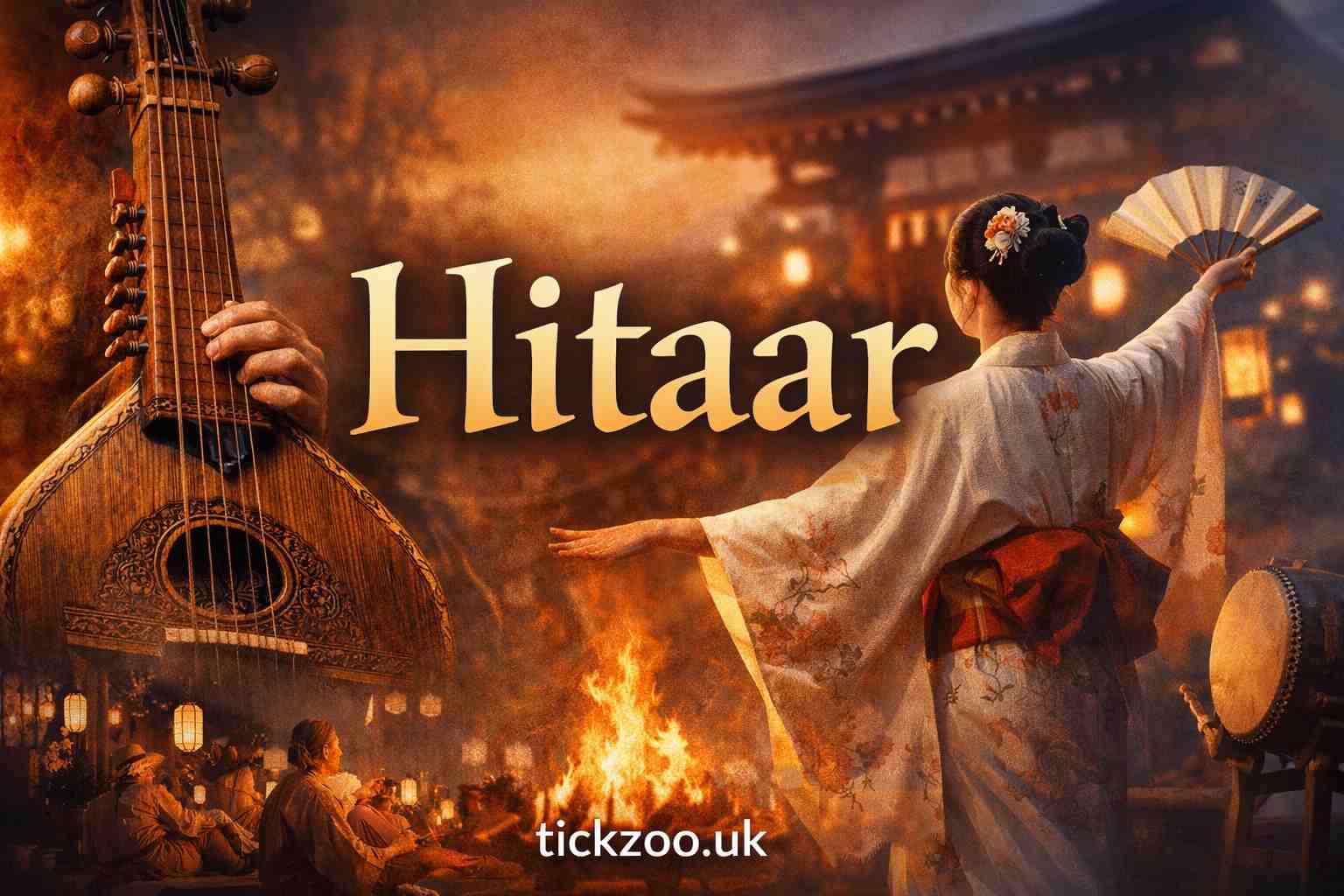
Hitaar is a fascinating term that has emerged across various cultures and artistic contexts. For many, it refers to a mesmerizing tradition rooted in movement, ritual, and cultural expression; for others, it denotes a unique musical instrument with warm, meditative tones. In this article, we dig deep into both of these interpretations — exploring history, techniques, cultural relevance, modern adaptations, psychological impact, and the future of Hitaar in the global arts landscape.
Whether you’re interested in culture, music, anthropology, or personal development, this article offers a complete, SEO‑optimized guide to understanding Hitaar in all its dimensions.
What is Hitaar?
The term Hitaar does not have a universally agreed‑upon singular meaning in academic literature, but popular sources describe two major interpretations that coexist today:
- As a cultural performance art often associated with slow, symbolic movement — sometimes linked with ritual or meditative practices.
- As a stringed musical instrument — a fretted, hollow‑bodied form similar to traditional lutes or folk guitars with serene tones.
Despite the differing stories, both interpretations emphasize connection, creativity, emotional expression, and harmony — reflecting humanity’s search for meaning through sound, movement, community, and ritual.
The True Meaning of Hitaar
In its cultural sense, Hitaar is often seen as an embodiment of art and ritual that transcends entertainment. Some writers link it to meditative movement practices that draw from Japanese traditions involving deliberate gestures performed to rhythmic music — sometimes related to temple rituals, seasonal celebrations, or quiet introspective performance.
Conversely, as a musical instrument, Hitaar refers to a stringed instrument played by plucking or strumming whose tones tend to be warm, calm, and reflective — often used in folk, fusion, and world music.
istinct cultural streams yet share a core idea: Hitaar is about expression and connection.
Is Hitaar Music, Art, or Cultural Expression?
The dual nature of Hitaar spans the boundaries between:
- Art form — blending movement with emotion.
- Musical instrument — creating harmonies and musical narratives.
- Cultural expression — reinforcing identity and community bonds.
Whether performed in festival settings or strummed in a quiet room, Hitaar revolves around the artistic expression of emotion, history, and storytelling.
Why Hitaar Still Matters Today
In an age where many artistic forms have global reach but shallow engagement, Hitaar represents authenticity and depth — whether through ritual form or music.
- It brings communities together.
- It reflects cultural identity and heritage.
- It promotes meditative connection and emotional expression.
For many people interested in tradition, mindfulness, or folk art, Hitaar offers a bridge between past and present.
The Origins and History of Hitaar
The origins of Hitaar are complex and multifaceted:
Cultural Origins
Many sources frame Hitaar as a cultural performance that may draw on ancient practices, particularly from East Asia (e.g., Japan) where movement, ritual, and music intertwine. While Hitaar per se may not appear in classical historical texts, its themes are widely considered to borrow from Shinto and Buddhist practices of movement and ritual dance.
In this context, early performances may have been part of temple festivals, seasonal rites, and communal celebrations that encouraged participants to express gratitude, respect, and harmony with nature.
Musical Origins
In its form as an instrument, Hitaar’s development likely mirrors the evolution of lute‑like string instruments across cultures. Instruments with similar features — a fretted neck and resonant hollow body — have existed for hundreds of years across Asia, the Middle East, and Europe.
According to some accounts, instruments like the Hitaar evolved from early lute designs brought along historic trade routes, adapted by local artisans into varied forms used in folk and court music.
Cultural Significance of Hitaar
Whether as performance or instrument, Hitaar often has a deeper cultural meaning:
- It can symbolize community unity and shared heritage.
- It can carry symbolic meaning through gestures, costumes, and movement.
- It energizes celebrations, festivals, and rituals, reinforcing identity.
- Its music or performance becomes a medium for emotional storytelling.
In many cultures, music and movement are inseparable from social identity — and Hitaar highlights this beautifully.
The Art of Hitaar: Techniques and Styles
Musical Techniques
As a string instrument:
- Hitaar is typically played through plucking, strumming, or fingerpicking.
- Modern versions incorporate metal tuners and pickups for amplified sound.
- Its warm tonal character makes it suitable for folk, fusion, and meditative music.
Movement Techniques
In performance art:
- Movements are generally slow, deliberate, and symbolic.
- Each gesture may convey elements such as rhythm, emotion, or social narrative.
The combination of rhythm and melody — whether in sound or movement — brings a nuanced depth to Hitaar performances.
Regional Styles of Hitaar
Different regions interpret Hitaar uniquely:
- In some Japanese communities, Hitaar performances emphasize ritual and meditation infused with traditional instruments like the shamisen or taiko drums.
- In music contexts beyond Japan, Hitaar as an instrument reflects a fusion of Middle Eastern, South Asian, and global folk styles.
These stylistic differences contribute to the richness of Hitaar’s cultural tapestry.
Hitaar as a Storytelling Medium
More than sound or movement, Hitaar acts as a vessel for narrative:
- Songs or performances may depict historical events.
- Gesture and music together can express emotional arcs.
- Through rhythm and melody, Hitaar connects audiences to generational memory and heritage.
For communities without written records, this embodied storytelling becomes a powerful tradition.
The Hitaar Instrument: Craft, Sound, and Performance
The Hitaar instrument has specific characteristics that make it noteworthy:
- Fretted, hollow body similar to a guitar or lute.
- String range often between 5–8 depending on tradition.
- Warm, meditative tone suitable for introspective playing.
- Traditional craftsmanship emphasizes hardwood bodies and hand‑made tuners.
Modern makers sometimes add pickups and modern hardware, expanding the musical possibilities of the instrument.
How Hitaar is Performed
Instrument Performance
Playing the Hitaar involves:
- Strumming open chords for beginners.
- Fingerpicking and harmonics for advanced players.
- Use in solo and ensemble settings in both traditional and contemporary music.
Cultural Performance
In the ritual interpretation, Hitaar performances often:
- Last from minutes up to an hour.
- Are accompanied by traditional instruments, chant, or rhythmic sound.
- Emphasize meditative stillness and emotional depth.
Tools and Materials Used for Hitaar
Musical Instruments
- Hardwood for the body.
- Metal or synthetic strings.
- Optional pickups for electric amplification.
Cultural Practice Props
- Traditional costume or garments.
- Instruments like taiko, shamisen, or flutes for accompaniment.
These elements enhance the performance’s sensory and emotional impact.
Modern Adaptations of Hitaar
Today, Hitaar is not confined to tradition:
- Fusion artists blend Hitaar sounds with electronic music. Digital platforms showcase Hitaar tutorials and livestreams.
- Workshops and cultural exchanges help spread global awareness.
This evolution helps Hitaar remain vibrant and relevant in contemporary art scenes.
Psychological and Emotional Impact of Hitaar
Engaging with Hitaar — whether through movement or music — offers emotional benefits:
- Enhances mindfulness and emotional clarity.
- Encourages self‑expression and resilience.
- Promotes community connection through shared experience.
These benefits make it appealing not only as art but as a path to holistic wellbeing.
Hitaar and Personal Growth
Practicing Hitaar can foster:
- Creativity through improvisation and performance.
- Communication skills through collaborative expression.
- Self‑awareness and discipline.
Its role in personal growth echoes ancient philosophy — connecting art with life and self‑knowledge.
Hitaar in Daily Life
Hitaar might integrate into everyday routines through:
- Cultural festivals and public performances. (News Swift)
- Music sessions or classes featuring the instrument version.
- Mindfulness workshops incorporating Hitaar movement.
This embedded practice enhances connection with cultural heritage and personal expression.
Benefits of Practicing Hitaar
Some common benefits include:
- Emotional balance and focus.
- Cultural appreciation and identity formation.
- Enhanced creativity and musical skill.
These benefits apply to both performers and audiences alike.
Global Perspective of Hitaar
Hitaar — in its multiple meanings — resonates globally:
- In Japan, rituals connect people to tradition.
- Worldwide, the instrument style fosters musical fusion.
- Digital culture spreads awareness beyond original boundaries.
This broad influence showcases how ancient arts can evolve yet retain cultural power.
Challenges in Preserving Hitaar
Despite its beauty, Hitaar faces challenges:
- Modernization and cultural dilution threatening tradition.
- Limited formal education for traditional techniques.
- Misinterpretation or oversimplification.
Balanced preservation efforts require documentation, practice, and cultural respect.
The Future of Hitaar
Technology and collaboration promise new life for Hitaar:
- Online learning tools
- Fusion performances
- Cross‑cultural collaborations
- Digital archives and livestream exposure
The future of Hitaar lies in honoring its roots while adapting its expressive power to contemporary needs.
Why Hitaar Continues to Inspire
Ultimately, Hitaar endures because it speaks to something universal — our desire to connect, create, reflect, and express. Whether played as gentle music or performed as ritual movement, it resonates with people across cultures, generations, and artistic traditions.
Conclusion: The Enduring Legacy of Hitaar
Hitaar stands at the intersection of tradition and innovation, emotion and technique, story and sound. Its dual identity — as both cultural art and musical instrument — reveals the rich complexity of human expression. From meditative performances to soulful melodies, Hitaar invites us to slow down, feel deeply, and connect with others through shared creative experience.
As it evolves with the digital age, Hitaar continues to inspire, captivate, and unite — proving that art, in whatever form it takes, is timeless.