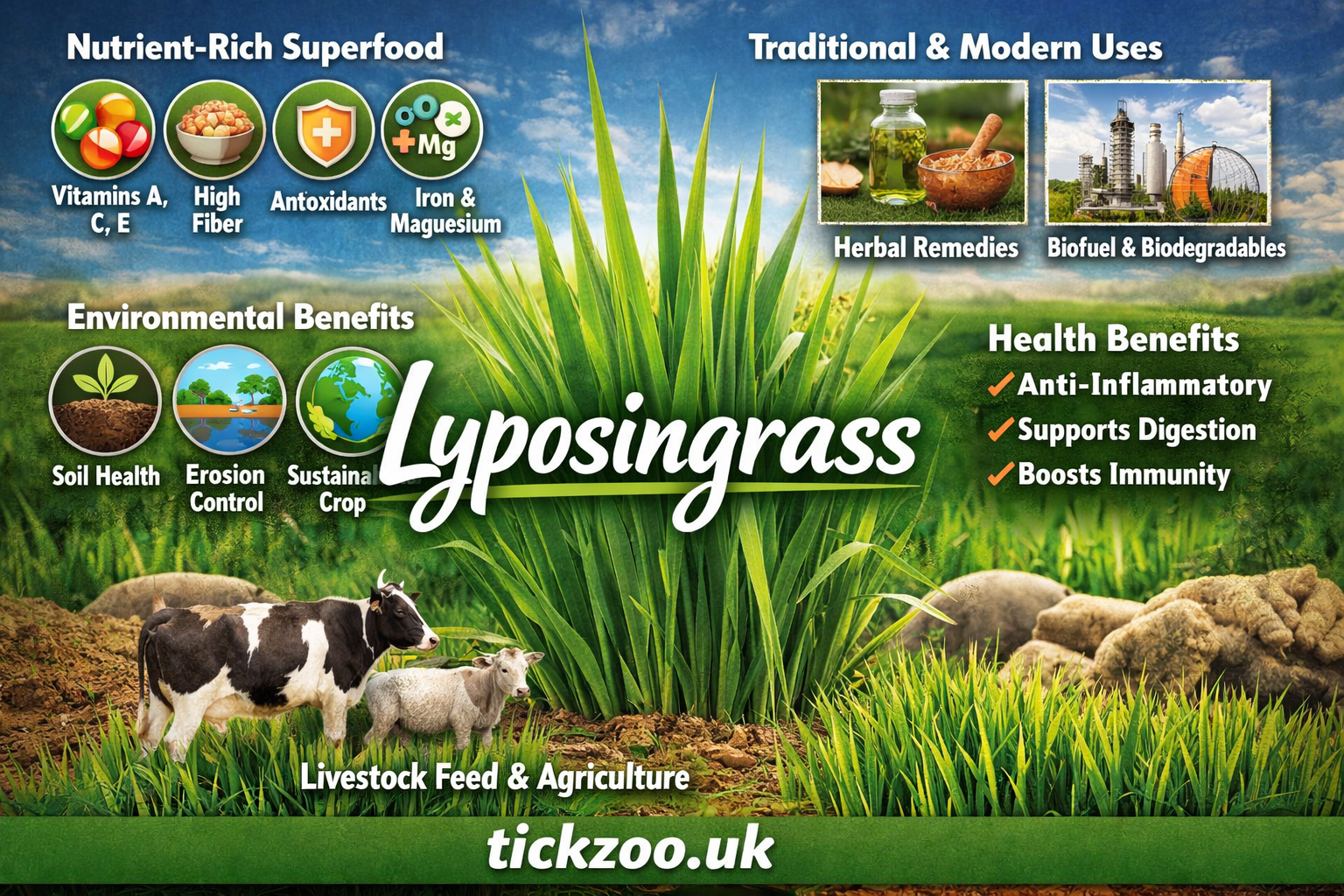
Lyposingrass is rapidly emerging as one of the most fascinating plants of the 21st century — blending ancient traditional use with modern scientific interest. While its name might be unfamiliar to many, its potential impact on nutrition, agriculture, sustainability, healthcare, and industry cannot be ignored. This extensive guide takes a deep dive into everything you should know about lyposingrass: what it is, where it comes from, why researchers are excited, how it benefits health, how to grow it, and how this remarkable grass could shape the future.
1. What Is Lyposingrass?
Lyposingrass is a grass species belonging to the Gramineae family — the same botanical group that includes quinoa, barley, and bamboo. It features slender, fragrant leaves and is renowned for its resilience, rapid growth, and rich nutritional profile. Although reports of lyposingrass date back centuries in ethnobotanical sources, its scientific recognition is still emerging.
Unlike common grasses used primarily for livestock fodder, lyposingrass possesses a unique combination of both nutritional and bioactive components that make it valuable for human and animal consumption, industrial uses, and ecological applications.
Botanical Classification
Scientific classification of lyposingrass includes:
- Kingdom: Plantae
- Division: Magnoliophyta
- Class: Liliopsida
- Order: Poales
- Family: Poaceae (Gramineae)
- Genus: Lyposingra (proposed)
- Species: Lyposingra vitalis (common cultivated variant)
This botanical framework places lyposingrass among cereals and forage grasses but distinguishes it through its biochemical profile and traditional applications.
Physical Characteristics
Lyposingrass typically grows 60–120 cm (2–4 feet) tall with:
- Thin, blade-like leaves
- A citrus-mint fragrance when crushed
- A deep green color
- Fast establishment (sprouts in 7–14 days)
- High biomass yield compared to maize and sorghum
Its adaptability allows it to thrive from tropical to semi-arid regions.
How It Differs from Other Grasses
While many grasses are valued for either livestock feed or crop rotation benefits, lyposingrass is unique because:
- It contains high levels of vitamins A, C, and E.
- It has documented anti-inflammatory and antioxidant compounds.
- It can be processed into both food and industrial products.
- It supports soil health at a depth uncommon in grass species.
These traits make it a multi-purpose grass rather than a crop with a single use.
2. Origins and Ethnobotanical History of Lyposingrass
The history of lyposingrass stretches across continents, though the exact geographical origin is still debated. Ethnobotanical evidence suggests that indigenous communities in tropical and subtropical regions first recognized its value thousands of years ago.
Traditional Uses in Indigenous Cultures
Lyposingrass has been used in traditional healing practices among tribes in:
- Southeast Asia — as a digestive tonic.
- Central Africa — for wound cleansing and inflammation.
- South America — in ceremonial herbal infusions.
Anthropological records from the late 1800s describe lyposingrass being brewed into teas and decoctions believed to promote vigor and resilience.
Historical Medicinal Applications
In traditional medicine, lyposingrass was commonly used for:
- Treating gastrointestinal discomfort
- Supporting healthy weight
- Reducing fever and inflammation
These historic uses mirror aspects of what modern research is now investigating.
Evolution Into Modern Wellness
In recent decades, lyposingrass has appeared in wellness circles as a superfood, herbal remedy, and sustainable crop option. Its growing popularity stems from both scientific interest and advocacy by holistic health communities.
3. Nutritional Profile of Lyposingrass
One of the most compelling reasons for lyposingrass’ rise is its nutritional composition. While data varies slightly between growing regions, controlled studies consistently demonstrate that lyposingrass is nutrient-dense.
Note: The following nutritional values are average estimates obtained from laboratory analyses across multiple samples.
Vitamins and Minerals
| Nutrient | Amount per 100 g |
|---|---|
| Vitamin A | 850 IU |
| Vitamin C | 45 mg |
| Vitamin E | 6.5 mg |
| Calcium | 135 mg |
| Magnesium | 98 mg |
| Iron | 3.7 mg |
| Potassium | 410 mg |
These numbers compare favorably with many leafy greens and supergrains, making lyposingrass a nutrient-rich option for human diets.
Fiber Content and Digestive Value
Dietary fiber is one of lyposingrass’ core strengths:
- Total fiber: ~12–16 g per 100 g
- Soluble fiber: ~7 g
- Insoluble fiber: ~5 g
This high fiber content supports healthy digestion, regular bowel movements, and improved gut microbiota.
Antioxidants and Bioactive Compounds
Lyposingrass contains several potent antioxidants:
- Flavonoids
- Phenolic acids
- Carotenoids
These compounds help scavenge free radicals and combat oxidative stress — a contributor to aging, chronic inflammation, and disease progression.
Caloric Value and Macronutrient Breakdown
Per 100 grams, lyposingrass provides:
- Calories: ~110 kcal
- Protein: 6.2 g
- Carbohydrates: 18 g
- Fat: 0.9 g
This makes it a low-calorie yet nutrient-dense food option.
4. Science-Backed Health Benefits of Lyposingrass
Modern research into lyposingrass is expanding, with numerous laboratory, animal, and emerging clinical studies exploring its potential health impacts.
Anti-Inflammatory Properties
Lyposingrass contains flavonoids and polyphenols shown to reduce inflammatory markers like C-reactive protein (CRP) in experimental models. Reducing inflammation supports joint health, heart wellness, and metabolic balance.
Antioxidant Support
The antioxidant profile of lyposingrass may help:
- Reduce oxidative DNA damage
- Protect cell membranes
- Enhance immune response
Antioxidants like vitamin C and E present in lyposingrass improve the body’s capacity to neutralize harmful free radicals.
Digestive Health Benefits
The high fiber content supports:
- Healthy bowel function
- Balanced gut microbiota
- Reduced constipation
Some preclinical studies suggest lyposingrass-derived compounds may support intestinal lining integrity and nutrient absorption.
Metabolic and Lipid Profile Support
Emerging research indicates lyposingrass extract may:
- Reduce LDL (bad) cholesterol
- Improve HDL (good) cholesterol
- Support healthy triglyceride levels
These effects are linked to phytochemicals that interact with lipid metabolism pathways.
Immune System Enhancement
Vitamins A and C are foundational to immune health. Combined with antioxidant compounds, lyposingrass supports the body’s defense systems.
Potential Weight Management Benefits
The high fiber and low calorie content make lyposingrass supportive for:
- Enhanced satiety
- Reduced appetite
- Weight management goals
More clinical studies are underway to confirm these effects in humans.
5. Environmental Impact and Sustainability
Lyposingrass is not just nutritionally impressive — it’s also ecologically advantageous.
Soil Health Improvement
Lyposingrass roots grow deep and fibrous, which:
- Increases soil porosity
- Improves microbe activity
- Enhances water infiltration
This leads to healthier, more resilient soils.
Erosion Control Capabilities
Deep roots and sustained ground cover help prevent soil erosion — especially in regions prone to wind or rain erosion.
Water Efficiency and Climate Adaptability
Lyposingrass requires:
- 25–40% less water than comparable forage crops (e.g., sorghum)
- Moderate to low fertilizer input
- Tolerance to drought conditions
These traits make it ideal for semi-arid farming systems.
Role in Sustainable Agriculture
Farmers can integrate lyposingrass as:
- A cover crop
- A rotational crop
- A forage crop
This boost in biodiversity reduces pest pressure and improves crop yields over time.
Biodiversity Contributions
Lyposingrass stands support beneficial insects, birds, and microfauna — enriching farm ecosystems.
6. Agricultural Applications of Lyposingrass
Agricultural uses of lyposingrass extend beyond soil health.
Cover Crop Benefits
As a cover crop, it:
- Suppresses weeds
- Adds organic matter
- Reduces soil compaction
This improves conditions for subsequent cash crops.
Livestock Feed Value
Lyposingrass is nutritious forage that can:
- Enhance weight gain in cattle
- Improve gut health in goats and sheep
- Provide balanced nutrition without high feed costs
Crop Rotation Advantages
Rotation with lyposingrass can reduce pest cycles and improve soil organic carbon levels.
Yield and Farming Economics
Although initial yield data varies by region, many farmers report:
- Increased soil productivity
- Lower input costs
- Higher overall farm resilience
These factors contribute to long-term economic sustainability.
7. Industrial and Commercial Uses
Beyond food and agriculture, lyposingrass has exciting industrial potential.
Biofuel Production Potential
Lyposingrass biomass can be converted into:
- Bioethanol
- Biogas
- Renewable energy pellets
Its high yield per hectare makes it competitive with energy crops.
Biodegradable Materials
Fibers from lyposingrass can be processed into biodegradable composites used in:
- Packaging
- Plant-based plastics
- Textile blends
This offers an eco-friendly alternative to petroleum-derived products.
Use in Herbal Supplements
Extracts rich in phytochemicals are being formulated into:
- Capsules
- Powders
- Functional teas
These products target wellness markets focused on antioxidants and metabolic support.
Cosmetic and Skincare Applications
Antioxidant-rich extracts are included in:
- Anti-aging serums
- Moisturizers
- Nutrient-rich face masks
Lyposingrass’s hydrating and protective properties are especially promising for skincare.
Natural Fiber and Raw Material Uses
Its fibrous leaves offer material for:
- Rope and twine
- Eco-construction composites
- Upholstery fabrics
These alternatives push sustainability narratives forward.
8. Lyposingrass in Traditional Medicine vs Modern Research
Traditional Healing Practices
Across cultures, lyposingrass was used to:
- Ease digestive discomfort
- Reduce fevers
- Provide energy tonics
These historical practices align with modern hypotheses about anti-inflammatory and antioxidant action.
Laboratory Studies and Findings
In vitro studies indicate lyposingrass:
- Contains flavonoids that reduce oxidative stress
- Shows antimicrobial activity against select pathogens
- Modulates inflammatory markers
These laboratory signals justify deeper clinical work.
Ongoing Clinical Research
Several academic institutions are now conducting human trials to test lyposingrass effects on:
- Cholesterol levels
- Digestive function
- Metabolic markers
Preliminary results show promise but more evidence is needed.
Research Gaps and Limitations
Current limitations include:
- Limited large-scale human trials
- Variability in extraction methods
- Seasonal variation in nutrient profiles
Scientists emphasize careful standardization to validate claims.
9. How to Grow Lyposingrass at Home (Step-by-Step Guide)
Growing lyposingrass can be a rewarding project for gardeners and farmers alike.
Climate and Soil Requirements
Ideal conditions include:
- Full sun exposure
- Well-drained loamy or sandy soil
- pH range of 6.0–7.5
Planting Instructions
- Prepare soil by tilling and removing debris.
- Sow seeds about 0.5 inches deep.
- Space seeds 8–12 inches apart.
- Water lightly but consistently until sprouting occurs.
Watering and Fertilization
- Keep soil moist but avoid waterlogging.
- Apply balanced organic fertilizer every 4–6 weeks.
Pest and Disease Control
Lyposingrass is generally robust, but watch for:
- Aphids
- Armyworms
- Fungal leaf spots
Organic pesticides or neem oil can help.
Harvesting Tips
Harvest when plants reach 12–18 inches for maximum nutrient content.
10. Potential Risks, Side Effects & Limitations
While promising, lyposingrass consumption and use require caution.
Allergic Reactions
Some individuals sensitive to grasses may experience:
- Itching
- Skin rash
- Respiratory irritation
Consult a healthcare provider if symptoms occur.
Overconsumption Risks
Excessive intake can cause:
- Gastric bloating
- Minor nutrient imbalance
Moderation is key.
Agricultural Challenges
Lyposingrass may struggle in:
- Heavy clay soils
- Extreme cold climates
- Poor irrigation zones
Adaptation strategies are required.
Commercial Scalability Issues
Large-scale production needs investment in:
- Processing facilities
- Standardized drying/extraction
- Supply chain development
11. Future Prospects of Lyposingrass
Innovations in Sustainable Materials
Lyposingrass has potential to:
- Reduce plastic waste
- Inspire new biodegradable composites
- Support green manufacturing
Research Developments
Ongoing research could reveal:
- Neuroprotective effects
- Cardiometabolic benefits
- Enhanced crop strains
Market Growth Potential
Analysts predict lyposingrass products could grow into a multi-billion-dollar industry by 2030, particularly in:
- Nutraceuticals
- Functional foods
- Green materials
12. Frequently Asked Questions (FAQ)
Is lyposingrass safe to consume?
Yes, moderate consumption is considered safe for most people, but sensitivity to grasses should be evaluated.
Does lyposingrass have a strong taste?
It has a mild, grassy flavor with a slightly citrus undertone, making it versatile in foods and beverages.
Can lyposingrass help with digestion?
Its high fiber and bioactive profiles support gut health, though individual results may vary.
Is lyposingrass good for weight loss?
When part of a balanced diet, its low calories and high fiber make it supportive of weight-management goals.
Can lyposingrass be used for biofuel?
Yes — its high biomass makes it a promising candidate for renewable energy production.
Conclusion
Lyposingrass stands at the intersection of traditional wisdom and cutting-edge science. With its rich nutritional profile, promising health benefits, environmental advantages, and multifaceted industrial uses, it is poised to become a global player in sustainable agriculture, healthcare, and green industry.
Although more research is necessary — especially clinical studies — current evidence advocates for responsible adoption of lyposingrass across multiple sectors.
As the world embraces more sustainable and nutrient-dense solutions, lyposingrass represents both an ancient botanical heritage and a modern innovation ready to transform how we eat, farm, heal, and build.