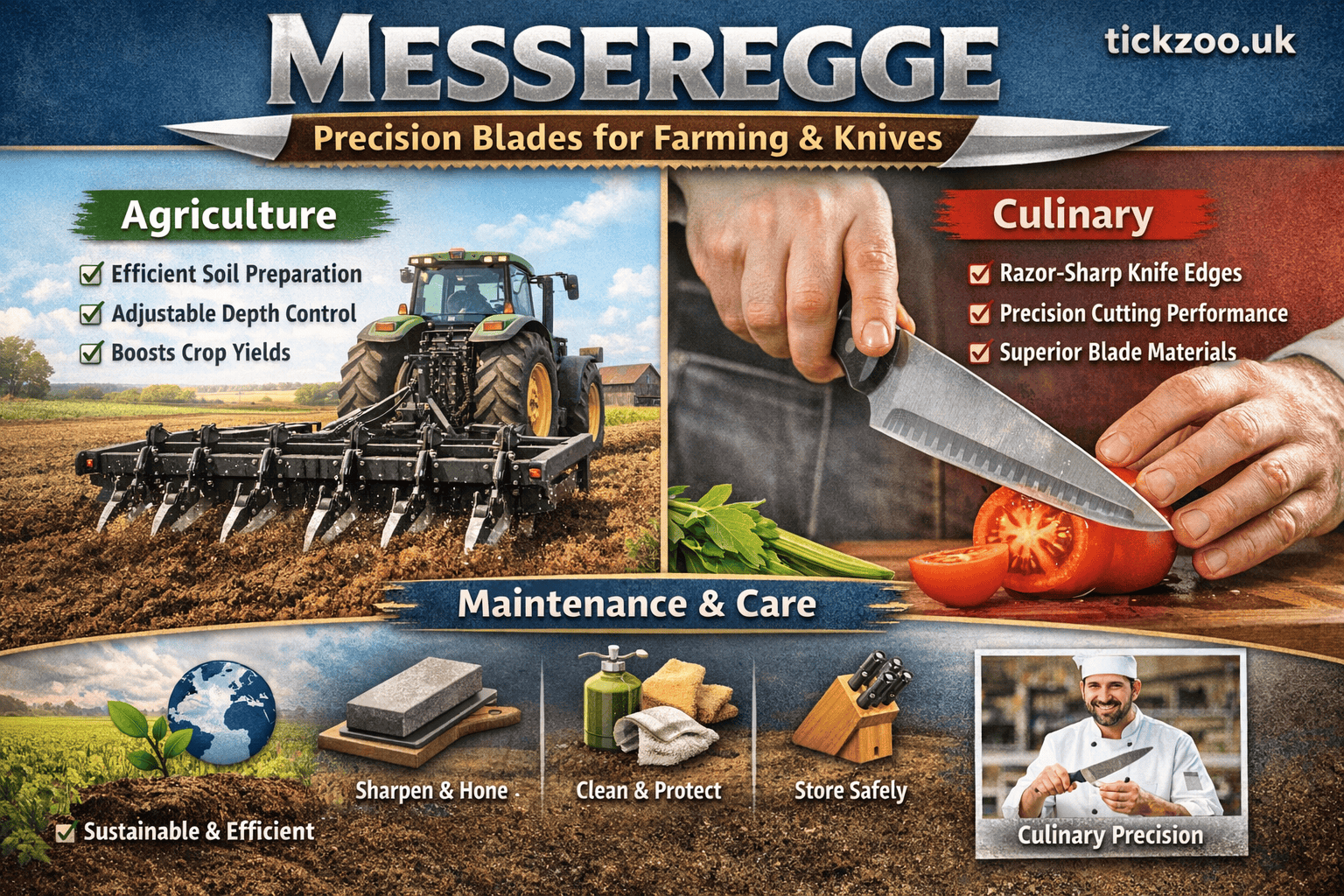
When it comes to tools that define precision and performance, few terms capture the imagination like Messeregge. Although rarely discussed in mainstream articles, this concept spans multiple disciplines — from revolutionary farming implements to the defining edge of a knife blade. Whether you’re a modern farmer seeking to optimize soil productivity or a culinary enthusiast aiming to master blade performance, understanding Messeregge can elevate your results significantly.
This comprehensive guide dives into every aspect of Messeregge — its history, design, applications, benefits, maintenance, and future prospects. By the end of this article, you’ll have a complete grasp of why this concept matters in both agricultural and culinary fields.
Introduction – What is Messeregge and Why It Matters
The word Messeregge may sound unfamiliar to many, but its essence is rooted in two universal concepts: precision and effectiveness.
At its core, Messeregge refers to the sharp cutting edge of a blade — whether that blade is part of a soil cultivation tool or a kitchen knife. It represents the meeting point between function and performance. Without a well‑crafted edge, a tool cannot perform its most basic task efficiently.
In agriculture, Messeregge tools cut into the soil with accuracy, fostering better aeration, moisture retention, and seedbed formation. In culinary arts, the Messeregge determines how smoothly a knife slices through ingredients, affecting everything from food texture to safety.
Origins and History of Messeregge
The concept of focusing on the cutting edge dates back centuries. Ancient agrarian societies understood that the right edge on a blade could improve farming efficiency. Early farmers used simple sharpened sticks and stones to loosen soil — the original precursor to later metal‑based tools.
As metallurgy advanced, so did blade design. In Europe, by the Middle Ages, precision agricultural blades were being forged to till heavier soils. In parallel, knifemakers in Asia and the Middle East were refining blade edges with astonishing sharpness, pioneering techniques that remain foundational in modern knife crafting.
Today, the term Messeregge embodies a marriage of traditional cutting craftsmanship and modern precision engineering.
Messeregge in Agriculture – Precision Tools for Modern Farming
How Messeregge Works for Soil Preparation
In agriculture, Messeregge typically refers to a precision blade tool used for soil preparation. Unlike traditional plows that turn entire layers of earth, Messeregge tools employ a series of finely set blades designed to penetrate and slice soil at specific depths.
This blade arrangement makes Messeregge particularly effective at:
- Breaking up compacted soil layers
- Promoting better aeration and drainage
- Preparing a consistent seedbed
- Minimizing soil disturbance
Precision here is key. The blades work to loosen the ground without over‑turning it — which helps preserve beneficial organisms and reduces soil erosion.
Key Design Features of Agricultural Messeregge
Modern Messeregge tools are engineered with several performance‑enhancing features:
- Adjustable Depth Control
Farmers can control how deep the blades penetrate, tailoring soil preparation to crop type and soil condition. - Lightweight Construction
Designed for ease of use, these tools reduce operator fatigue — especially important during long working sessions. - Durable Materials
High‑strength alloys help the blades withstand wear and tear, extending service life. - Strategic Blade Geometry
Multiple blades positioned at precise angles ensure consistent soil contact and optimal cultivation results.
Benefits of Using Messeregge for Farming
Investing in a Messeregge tool offers major advantages:
- Enhanced Soil Aeration: Improves root access to nutrients and water.
- Reduced Soil Compaction: Creates ideal conditions for root growth.
- Improved Moisture Retention: Helps maintain soil humidity in dry climates.
- Lower Labor Costs: Faster preparation compared to manual methods.
- Versatility: Effective across a range of soil types and crops.
Studies have shown that properly prepared soil can increase crop yields by up to 30% or more, depending on crop and region. Although these figures vary, it highlights the strong impact that optimized soil preparation can have.
Comparison with Traditional Farming Tools
Traditional tools like deep plows and heavy tillers have long been staples in agriculture. However, they often disrupt the natural soil ecosystem, destroy microbial life, and cause erosion over time.
Contrast this with Messeregge:
| Feature | Traditional Plow | Messeregge Tool |
|---|---|---|
| Soil Disturbance | High | Low to Moderate |
| Soil Compaction | Increased | Decreased |
| Fuel Consumption | High | Lower |
| Microbe Preservation | Poor | Better |
| Seedbed Consistency | Variable | Highly Consistent |
This comparison shows how precision tools can promote both productivity and sustainability.
Environmental and Sustainability Advantages
Sustainable agriculture aims to produce more while using fewer resources. Messeregge aligns with these principles by:
- Reducing soil erosion
- Supporting beneficial organisms
- Minimizing fuel usage and carbon emissions
- Preserving organic matter in the topsoil
In regions struggling with land degradation, precision soil tools are increasingly seen as part of ecological solutions.
Messeregge in Culinary Arts – Mastering Knife Sharpness and Performance
Understanding the Messeregge of a Knife
In culinary contexts, Messeregge refers to the sharpened edge of a knife blade — the part that makes actual contact with food.
While many focus on the handle or blade shape, the cutting edge determines:
- How effortlessly a knife slices
- How cleanly food is cut
- How safe the knife is to use
A dull edge requires more force, increasing the risk of slips and kitchen accidents.
Anatomy and Structure of a Knife Edge
Under magnification, a knife edge consists of microscopic serrations — tiny peaks and valleys that grip and separate material during cutting. The geometry of these features influences performance.
Key factors include:
- Blade Angle: Narrow angles = sharper but potentially weaker; wider angles = stronger but less sharp.
- Edge Geometry: Determines how smoothly the blade travels through different materials.
- Microscopic Finish: Finer finishes create cleaner, smoother cuts.
The ideal edge balances sharpness and durability based on intended use.
Blade Materials: Stainless, Carbon, and Alloys
The material of the blade has a major impact on Messeregge performance:
- Stainless Steel: Corrosion‑resistant, low maintenance, great for everyday kitchen knives.
- Carbon Steel: Offers superior edge sharpness and retention, but requires more care to prevent corrosion.
- High‑Carbon Stainless Steel: Hybrid material combining rust resistance with good edge holding.
- Powdered Steels & Advanced Alloys: Modern metallurgy allows very hard blades with exceptional edge retention — common in professional chef knives.
Each material comes with trade‑offs between ease of care, durability, and sharpness.
The Science of Sharpness and Edge Retention
Sharpness is not just about how thin the edge feels — it’s about how evenly aligned those microscopic teeth are.
Edge retention describes how long a blade keeps its sharpness with regular use.
Factors affecting edge retention include:
- Steel hardness (often measured on the Rockwell C scale)
- Cutting surface (wood/plastic boards preserve edge; glass or stone dulls edge)
- Frequency of honing and sharpening
- Cutting technique
Honing realigns the edge. Sharpening removes material to form a new edge.
Choosing the Right Messeregge for Culinary Applications
Knife selection matters.
Different dishes require different edges:
- Straight Edge: Best for slicing vegetables, meats, and clean cuts.
- Serrated Edge: Better for bread and foods with tough exteriors.
- Specialty Edges: Some knives have scalloped or partially serrated edges for specific purposes.
Understanding edge design helps chefs and home cooks choose the best tool for their tasks.
Maintenance and Care for Messeregge
Maintaining Agricultural Messeregge Tools
Just like any tool, agricultural Messeregge needs care:
- Clean after use: Prevent buildup of dirt and corrosive residues.
- Inspect for wear: Replace or sharpen blades that have dulled or bent.
- Store properly: Avoid exposure to moisture.
Routine maintenance can extend tool life by years and ensure consistent performance.
Knife Edge Maintenance: Honing, Sharpening, and Storage
For kitchen Messeregge:
- Hand wash knives: Avoid the dishwasher.
- Dry immediately: Moisture causes rust.
- Use honing rods: Keep edge aligned between sharpenings.
- Sharpen when needed: Whetstones provide control and precision.
- Store safely: Knife blocks, magnetic strips, or sheaths protect edges.
Neglecting these steps accelerates wear and reduces performance.
Common Mistakes That Reduce Performance
Some frequent errors include:
Agricultural Tools:
- Using blades at inappropriate depths
- Failing to adjust blade alignment
- Ignoring signs of wear
Knives:
- Cutting on hard surfaces (glass/stone)
- Overusing dishwasher cleaning
- Using knives for non‑cutting tasks
Avoiding these mistakes prolongs Messeregge integrity and functionality.
Success Stories and Case Studies
Farmers Who Transformed Yields Using Messeregge
Many farmers report noticeable improvements in crop performance after adopting precision soil tools. For example:
- Reduced preparation time
- More consistent seed germination
- Improved soil structure
- Lower fuel and labor costs
These outcomes demonstrate how precision blades positively impact real‑world farming.
Chefs Who Maximize Precision with a Perfect Knife Edge
Culinary professionals often emphasize the importance of a sharp edge:
- Faster prep times
- Cleaner cuts improve food presentation
- Less fatigue during extended use
- Increased safety
Precision knives are considered essential in restaurant kitchens and professional culinary training environments.
Comparing Messeregge Across Fields
Although soil tools and knives serve different purposes, they share essential principles:
| Aspect | Agriculture | Culinary |
|---|---|---|
| Precision | Essential for soil structure | Essential for clean cuts |
| Sharpness | Helps cut soil efficiently | Helps cut food safely |
| Maintenance | Regular blade care | Honing & sharpening |
| Durability | Long‑lasting metals | Steel edge maintenance |
| User Impact | Improves yields | Improves cooking performance |
Both contexts show how a refined edge maximizes performance outcomes.
Future of Messeregge – Innovation in Farming and Kitchen Tools
Trends in Agricultural Precision Tools
Advancements include:
- Blade materials with better wear resistance
- Depth sensors and adjustable mechanisms
- Integration with automated farm equipment
These innovations aim to further reduce labor and increase sustainability.
Advances in Knife Technology and Blade Materials
In knife making, new steels and manufacturing processes continue to push boundaries:
- Powder metallurgy steels with exceptional edge retention
- Hybrid blade designs for specialized tasks
- Ergonomics combined with edge science
These developments reflect the ongoing value of Messeregge principles.
Conclusion – Maximizing Performance with Messeregge
Messeregge represents more than a sharp edge — it signifies the heart of performance in both farming tools and culinary blades.
Whether you’re:
- Preparing soil for healthier crops
- Mastering knife skills in the kitchen
- Looking for ways to boost efficiency
- Committed to sustainable practices
Understanding Messeregge equips you with the knowledge to choose the right tools, maintain them properly, and harness their full potential.
Invest in precision. Respect the edge. Let Messeregge elevate your results.