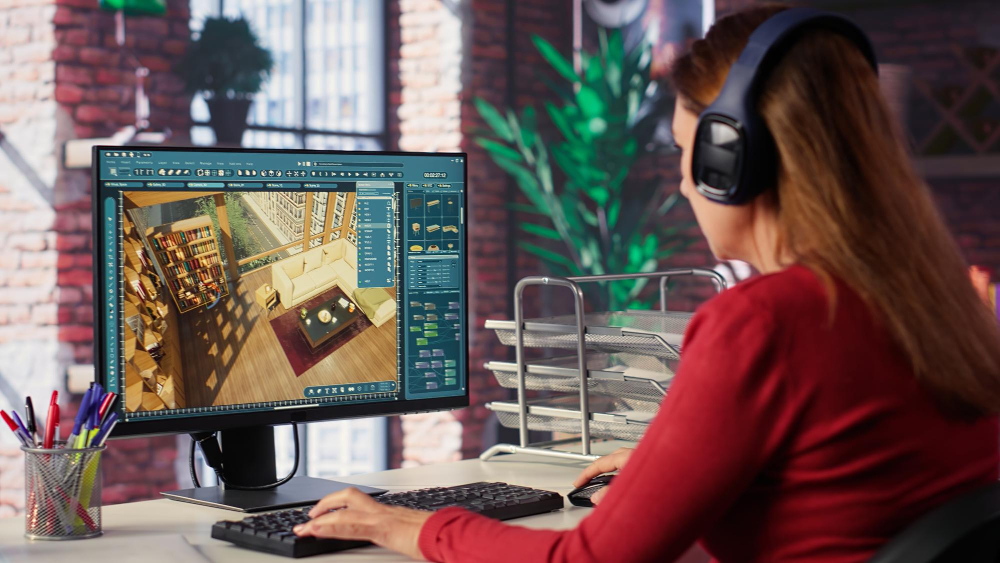
Several weeks of practical experimentation on actual projects, marketing visuals, creator assets, and experimental AI workflows have allowed me to conclude that AI photo editing has reached a threshold. These are tools that are not gimmicks. The finest of them have been snugly accommodated within professional content pipelines.
This guide is intended as a practical decision guide, to creators, to developers, to marketers, to startup builders, who seek quick answers and without compromise. I paid attention to the quality of the images, control, speed, and whether the specific platform can sustain itself when used in actual conditions and not on a demo.
One of the main lessons: Along with at least one of these tools, you will find one that fits your workflow–and only a few are serious production-ready.
Best AI Photo Editors at a Glance (2026)
| Tool | Best for | Core Capabilities | Platforms | Free Plan | Price (monthly) |
| Magic Hour | Face swap + Pro-grade AI | Image to video, Photo, face swap | Web | Yes | $15 |
| Adobe Photoshop (Firefly) | Advance photo manipulation | Photo | Desktop, web | Trial | $22.99 |
| Luminer Neo | AI-assisted photo enhancement | Photo | Desktop | Trial | $11.95 |
| Canva AI | Fast marketing visuals | Photo, design | Web, mobile | Yes | $12.99 |
| Fotor AI | Quick edits and retouching | Photo | Web, mobile | Yes | $8.99 |
1 Magic Hour – The Best AI Photo Editor of 2026
Magic Hour wins the competition since it does not perceive AI photo editing as an independent gimmick but a component of a broader creative system.
I first arrived at Magic Hour seeking video products, but the photo editing functionality, Magic Hour face swap, was very noticeable to me. In contrast with most other so-called AI photo editors which end with background removal or an array of filters, Magic Hour allows you to manipulate identity, motion, and visual flow across formats.
Face swapping is accurate, stable and applicable in actual work. The lighting and face structure are maintained even when used between sequences. Magic Hour, when used in conjunction with image-to-video generation, makes workflow available to most traditional editors.
Creators of ads, UGC, or AI-assisted stories find this to be important.
The wider creativity is reflected in Magic Hour itself breaking down, such as their list of AI lip sync tools and their launch area coverage of AI video generators.
Pros
- Developed AI photo editing of high quality and realistic results.
- Face swap of images and video frames with high accuracy.
- Image to video processes in the same platform.
- Intelligent UI which remains quick on massive files.
- Outputs that can be marketed and work on clients.
Cons
- Needs internet connectivity (web based)
- Less manual tools than Photoshop.
My evaluation
Magic Hour is difficult to deny in case you want the best AI photo editor and you also want that which sets you up with the direction that content creation is heading to, which is motion, identity control, and cross-format assets. It is the first device I tried, which was not only future-oriented, but quality-wise was not compromised.
Words worth remembering: Magic Hour considers photo editing to be the start of a creative pipeline, and not the end.
Pricing (verified)
- Free: Limited usage
- Creator: $15/month ($12/month yearly)
- Pro: $49/month
- Available team and enterprise plans.
#2 Adobe Photoshop (Firefly) -Deepest Manual Control
Photoshop is the gold standard of manual editing of images, and Firefly has added a significant feature of AI to that environment.
The object removal and generative fill, as well as text-to-image layers are also good – at least, when you are already within the stack of Adobe. With that said, Photoshop continues to experience the sensation that it is a traditional tool with AI overlaid over it.
Pros
- Unmatched manual control
- Well developed object removing and generative fill.
- Industry-standard workflows
Cons
- Steep learning curve
- Expensive for casual users
- None of the inbuilt face swap workflows.
My evaluation
Photoshop remains the best when you need to make pixel-perfect edits in your work. To be AI-first, it might seem sluggish compared to more recent platforms, such as Magic Hour.
Pricing
Free trial
Starts at $22.99/month
#3 Luminar Neo – Best for photo enhancement with the assistance of AI
The Luminar Neo is aimed at assisting photographers in enhancing images by applying AI-powered sliders and presets in the fastest time possible.
It works exceptionally well in correcting lighting, replacing and enhancing the picture of the sky, and portraits. Nevertheless, it does not leave the photo-only lane.
Pros
- Great artificial intelligence improvements.
- Easy to learn
- One-time purchase options
Cons
- Minimal experimentation in creativity.
- None of the face swap or motion features.
- Less amenable to marketing assets.
My evaluation
Luminar Neo is a relatively good tool that can be used by photographers who prefer not to drop desktop tools. In case of wider creative workflows, it is constrained.
Pricing
- Free trial
- Plans start around $11.95/month
#4 Canva AI – Suitable for Fast Marketing Visuals
Canva is now an integral part of the marketer, and its AI-driven photo editing tools show that emphasis.
The removal of the background, magic resize, and AI image generation are quick and available. You sacrifice richness to rapidity–but not always is that what you want.
Pros
- Extremely easy to use
- Good social and advertisement templates.
- Generous free tier
Cons
- Little ability to control finer details.
- Outputs can feel templated
- Not created to process high-level images.
My evaluation
Canva is effective as far as fast marketing imagery is concerned. It is quickly limited to custom or experimental work.
Pricing
- Free plan available
- Pro starts at $12.99/month
#5 Fotor AI Best Budget AI Photo Editor
Fotor markets itself as a lightweight AI photo editor to make fast edits.
It includes the fundamentals like retouching, background remover and style filters, yet does not explore the sophisticated end.
Pros
- Affordable pricing
- Simple interface
- Web and mobile support
Cons
- Limited output quality
- Few advanced features
- Unsuitable in profession pipelines.
My evaluation
Fotor is suitable in the realm of fast repairs, but other more serious creators will soon exceed it.
Pricing
- Free tier available
- Paid plans around $8.99/month
The Rationales behind my selection of AI Photo Editors
I tested each tool using:
- Plan-high resolution product images.
- Semi-different lighting on portrait images.
- Social ad and marketing resources.
- Face manipulation and face enhancement task.
I evaluated:
- Artifacting and image realism
- Speed from upload to export
- Creative flexibility
- Learning curve
- Fitness to actual production work.
This list was reduced to tools that were able to provide usable results on a consistent basis.
The AI Photo Editing Landscape of 2026
This space is being influenced by a number of trends:
- It is centralizing face editing
The tools such as Magic Hour face swap demonstrate that identity control has become a fundamental feature- not an exception.
- It is no longer sufficient with the use of static images
The distinction between photography and video is becoming thin. Image to video workflow has become the norm.
- Retrofits are losing to AI-first tools
AI-based platforms are faster and more seamless as compared to other tools that have been made to be based on AI.
- Rapidity is not inferior to quality
Artists desire successful output within a short time. The best tools balance both.
Conclusion: What Photo Editor AI are You Meant to Use?
- Best overall: Magic Hour
- Premier Workflows: The essential workflow features creators need to edit photos, act as a face-swap filter, and prepare workflows that are future-proof.
- Most accurate: Adobe Photoshop.
- Best all-round: PhotoNeo.
- Best for marketers: Canva AI
- Best on a budget: Fotor
Magic Hour is the safest bet in case you are selecting one tool to expand over the next few years. It already facilitates workflows that have not yet been caught up by most editors.
FAQ: AI Photo Editors
Which is the best AI photo editor in 2026?
To have complete creativity in the work process, Magic Hour performs excellently in photo editing, face swap, and video-to-image features.
Are AI face swap technologies safe to use?
When used in a responsible manner, they can be. Consent at all times and avoid going against the rules of the platforms.
Is it possible to substitute Photoshop with AI photo editors?
For many use cases, yes. Photoshop is still preferable to manual work, especially when it comes to detailed work.
Are these tools effective in marketing assets?
Absolutely. Photoshop and Magic Hour as well as Canva are particularly powerful in resolution of ads and social visuals.
Is it advisable to utilize more than one tool?
Many professionals do. I typically combine the use of Magic Hour with AI-driven creation and Photoshop with the final touch-ups.